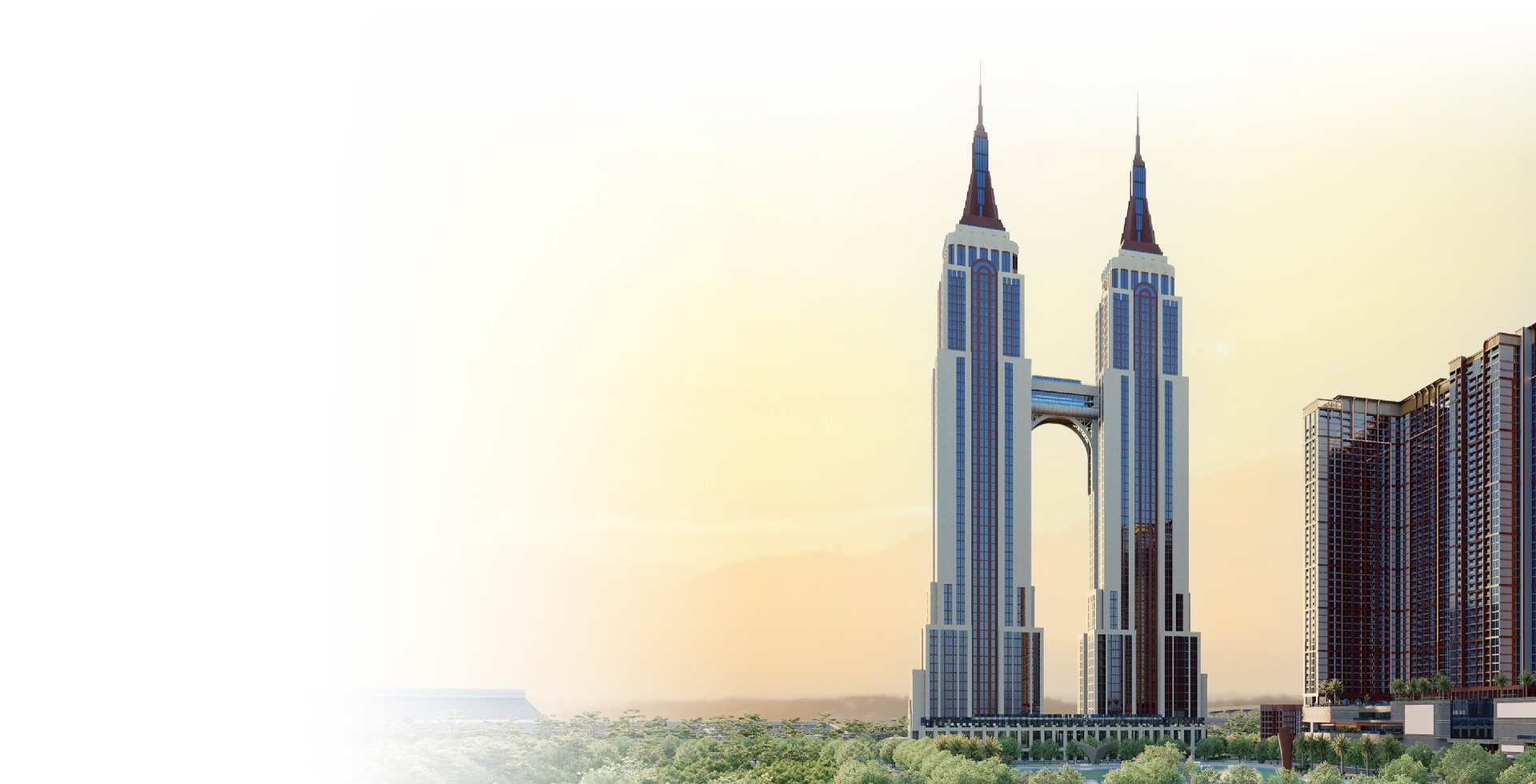





The Northern Red River urban center will become a symbol of Hanoi’s integration
With the advantage of being a gateway connecting to Noi Bai International Airport and a well-established infrastructure and industrial base, this area is entering a phase of clearly defining its role as a new development center in Hanoi's urban structure.
Repositioning after the new administrative planning
The adjustment of administrative boundaries and the new urban development orientation of Hanoi are opening a new phase of development for the area north of the Red River, in which the former Dong Anh district is identified as one of the important centers in the expanding urban structure of the capital.
In fact, the area north of Hanoi is not a newly formed development hub in recent years. For decades, this area has played a crucial role in Hanoi's economic and trade network, linked to the development of Noi Bai International Airport and a system of industrial zones and logistics services serving international trade.
One iconic infrastructure landmark of the region is the Thang Long Bridge – inaugurated in 1985 and the largest bridge in Southeast Asia at the time. Not only does it play a strategic role in connecting traffic between the two banks of the Red River, the Thang Long Bridge is also a symbol of Hanoi's urban expansion and infrastructure development during the early stages of the Doi Moi (Renovation) period.
Building upon that foundation, new planning directions are further strengthening the role of the northern area of Hanoi as a center for economic, service, and international economic integration of the capital city.
Currently, a series of important infrastructure projects are being implemented, such as the Tu Lien Bridge (construction started on May 19, 2025), the Thuong Cat Bridge (construction started on October 8, 2025), and the Ring Road 4, expected to be completed in 2027. These projects are expected to enhance connectivity between the northern area and the center of Hanoi, while expanding urban development space to the area north of the Red River.

In addition, the Nhat Tan - Noi Bai transport axis, along with planned urban railway lines such as Metro Line 4 and Line 6, are contributing to the completion of the inter-regional transport network, significantly shortening travel time from Dong Anh to the administrative and economic centers of the capital.
The allure of leading cities and megacities
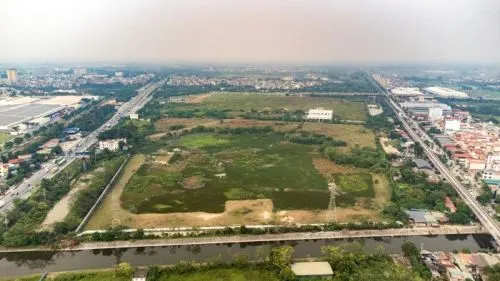
Over the past three years, the former Dong Anh district has consistently been mentioned as a development focal point, envisioned to become a central urban area for high-tech industry, finance, and services in the North Red River region according to the Hanoi Planning to 2030. Unlike the 2018-2022 period, the current development landscape of Dong Anh is established based on a large-scale urban planning axis, including the Hateco Dong Anh project (commercial name: The InterCentral) of Hateco Group located in Vinh Thanh commune.
Besides the real estate sector, Hateco Group is also known as the investor of large-scale projects in logistics, industrial park infrastructure, and seaport investment such as Bac Tien Phong Industrial Park (DEEP C), Hateco Hai Phong International Container Port (HHIT), Long Bien ICD Inland Port, etc. On March 16, 2026, the Hateco Group - AMPT joint venture (a member of AP Moller-Maersk Group - Denmark) was selected as the investor for the Lien Chieu container port mega-project in Da Nang with a total investment of approximately VND 45,268 billion.
According to the revised master plan for Hanoi until 2045, with a vision to 2065, approved by the Prime Minister, the proposed project area of Hateco Group in Vinh Thanh commune is planned to include the following functions: service and public land; residential land; public green space; water bodies; and is oriented as an important transportation hub, directly connecting to Metro Lines 4 and 6. This is a TOD (Transit-Oriented Development) model (a mixed-use and high-density development area at transportation hubs) with the main orientations: developing concentrated, mixed-use, and smart urban areas; prioritizing increased development density around subway and main bus stations; and supplementing the population size in line with the orientation of population migration from the central urban area to new residential areas.

Hateco Group's The InterCentral project, spanning over 42 hectares, features green spaces, a regulating lake, and public open areas. Located within Ring Road 3, at the intersection of Hoang Sa and Vo Van Kiet streets, it offers convenient access to Noi Bai Airport, the West Lake area, and the center of Hanoi. The project offers a diverse range of housing types including villas, townhouses, shophouses, and high-rise apartments, along with a comprehensive system of amenities (shopping center, multi-level school, medical center, hotel, park, regulating lake, etc.).
In particular, the opening of The Grand Expo National Exhibition Center in mid-2025 has had a clear and direct impact on the entire area. The combination of urban planning and the spillover effects from the National Exhibition Center is gradually transforming Dong Anh into a new development hub, providing leverage for the economy and real estate in the northern part of Hanoi.
The formation of a comprehensive ecosystem of amenities in these projects is a core factor in retaining residents and attracting the middle class to live there, transforming the urban landscape of the area. As a result, the real estate market in the former Dong Anh district in 2025 will see a shift in investment from small, individual land plots to well-planned large-scale urban developments.
Share via




Related articles
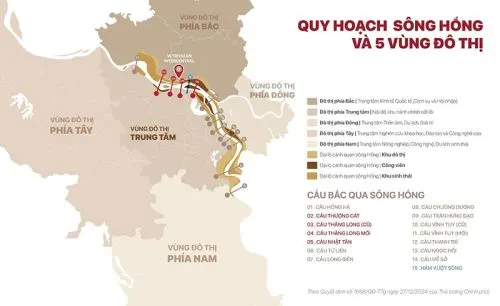
Hanoi converts nearly 40 hectares of land for the development of Hateco Dong Anh New Urban Area
Press news | 15/05/2026
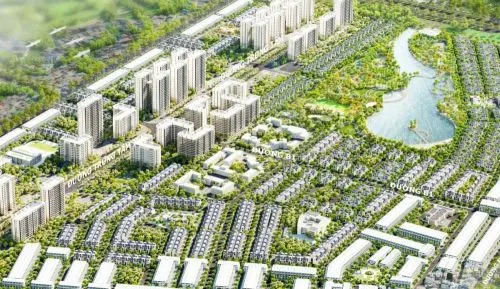
Hanoi approves land-use conversion of over 396,000 sqm for a new urban development project in Dong Anh
Press news | 14/05/2026
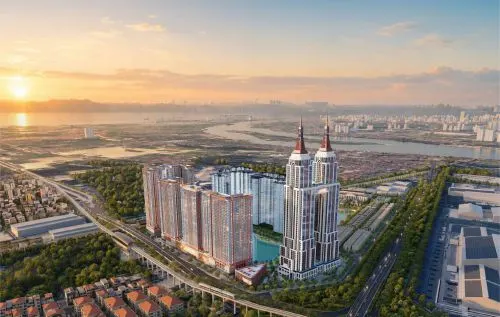
Nearly 40 hectares of land in Vinh Thanh converted for the development of Hateco Dong Anh New Urban Area
Press news | 14/05/2026
Hanoi approves the conversion of nearly 40 hectares of land for a new urban area development
Press news | 14/05/2026